Driveways are the largest surface most visitors see and the hardest to keep looking decent. They collect oil, rubber, leaf tannin, rust bleed and mould, and because concrete and pavers are porous, most of that soaks in rather than sitting on top.
Here's a realistic guide to what comes out, what doesn't, and how to reduce how often you deal with it.
Know what you're actually looking at
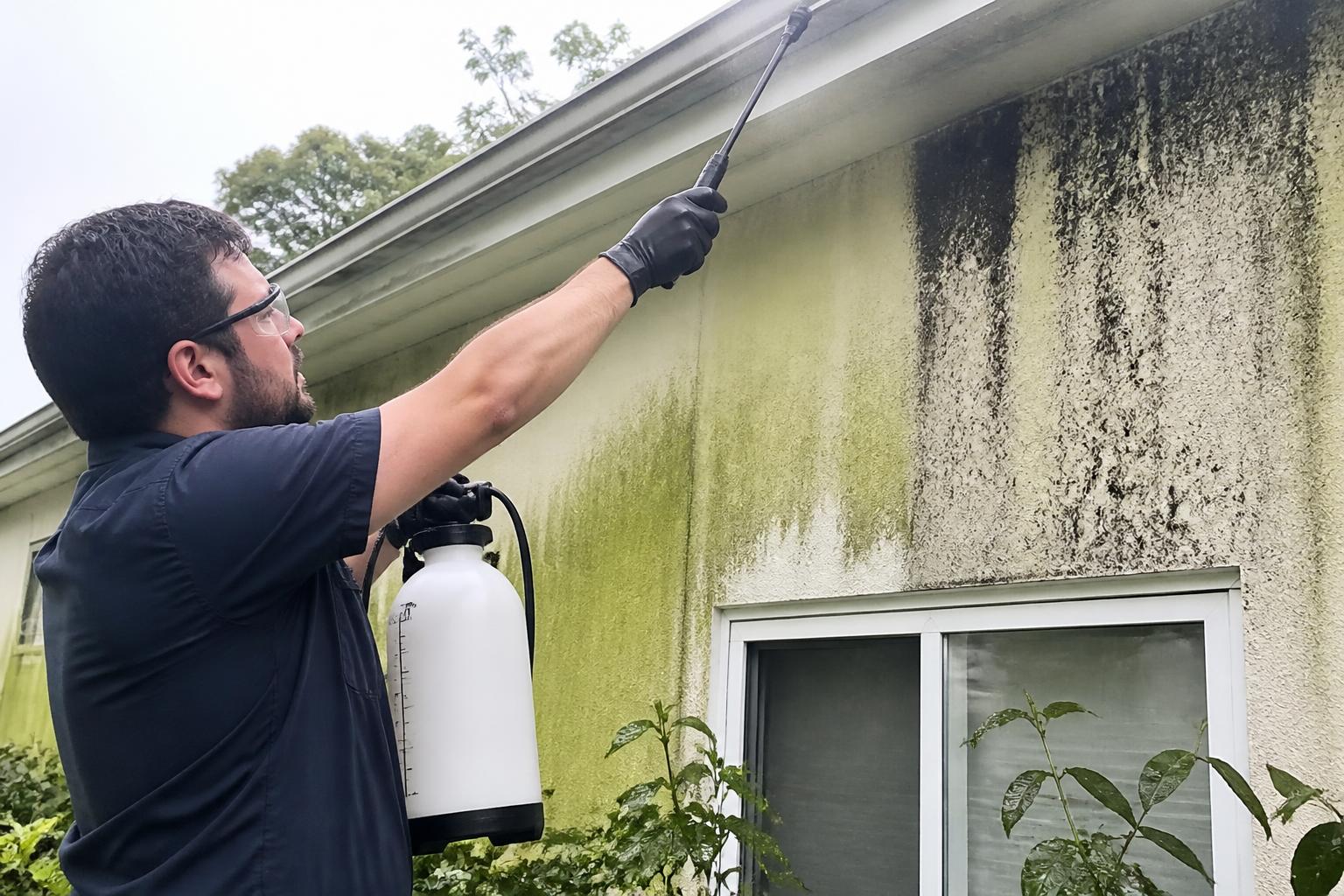
Most 'dirty' driveways are a combination of biological growth in the shaded sections and a grey film of carbon and traffic residue across the traffic lanes. Neither is soil, and neither responds to plain water.
- Green and black film: mould and algae — needs treatment, not pressure
- Dark patches under cars: oil and hydraulic fluid — needs degreasing and heat
- Orange streaks: rust bleed from furniture, reo or bore water
- Brown patches under trees: tannin staining from leaves and berries
- White powder or crust: efflorescence — mineral salts from within the concrete
What can actually be removed
Biological growth, carbon film, rubber and tannin come out almost completely with the right treatment. Fresh oil comes out well. Oil that has been soaking into porous concrete for a decade will usually leave a faint shadow — anybody promising a perfect result on old oil is guessing.
Efflorescence can be removed but tends to return, because the salts are migrating out from inside the slab. Sealing helps significantly.
Why finish quality is a technique issue
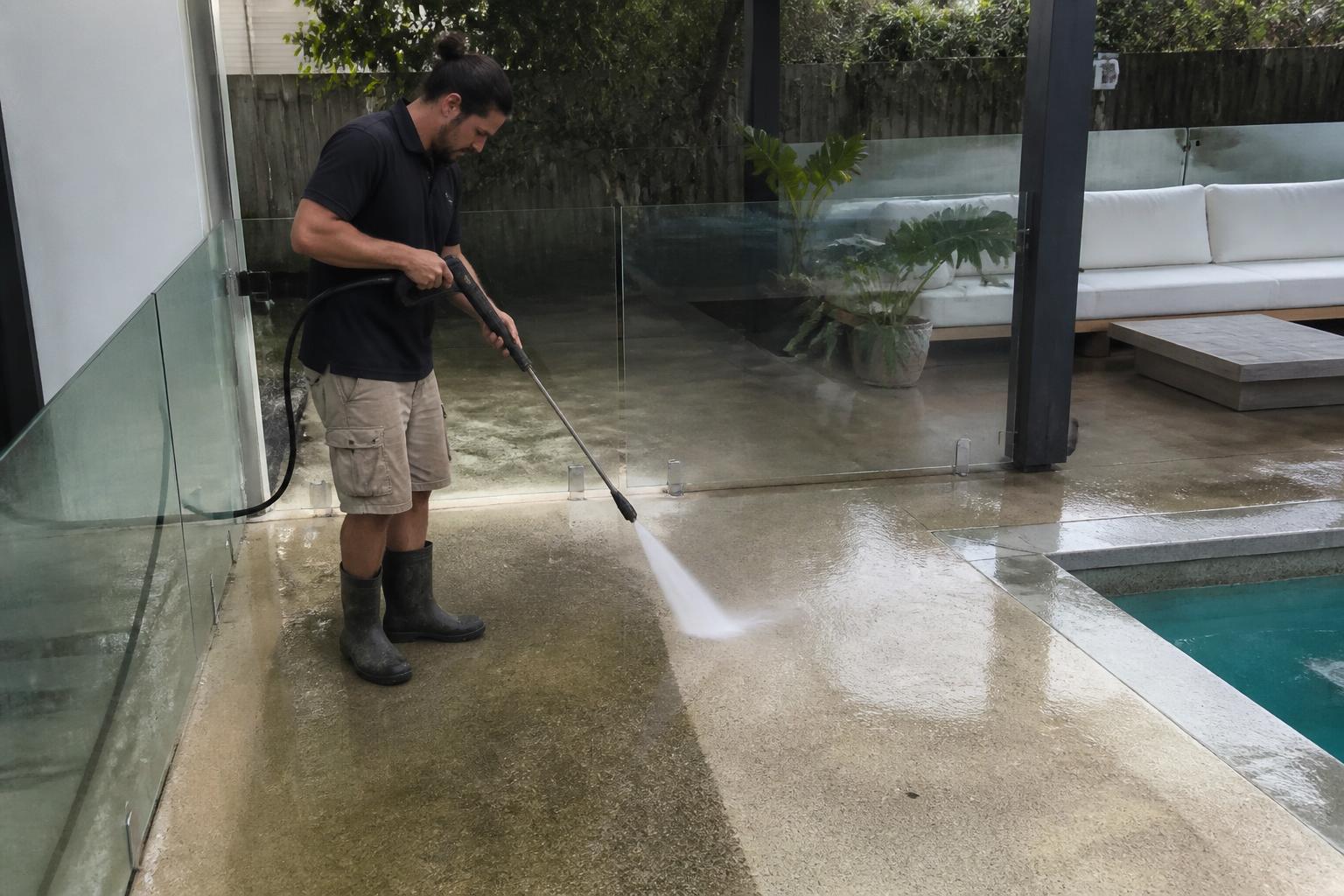
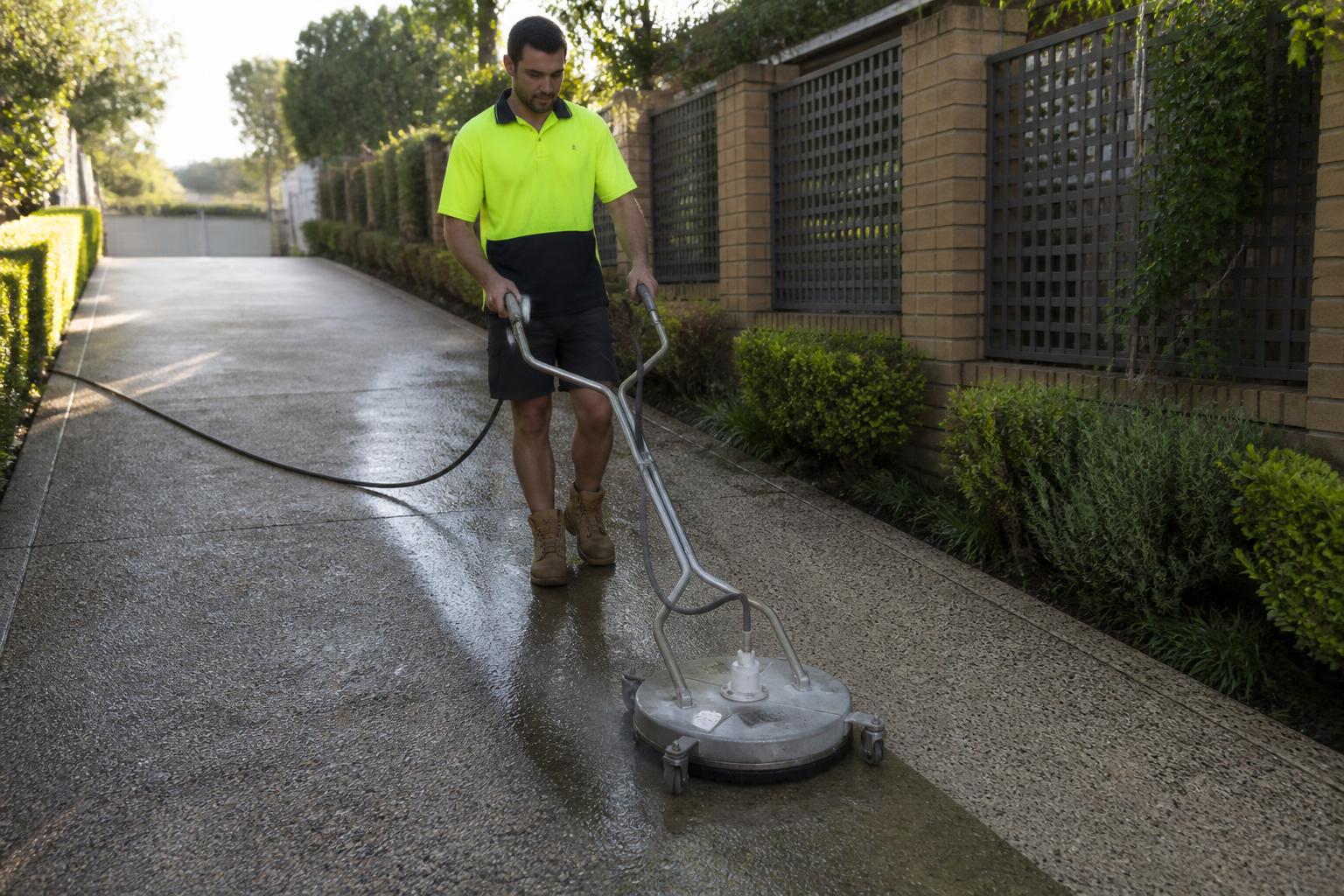
Those overlapping arcs you see on badly cleaned driveways come from cleaning a large flat area with a hand wand. Rotary surface cleaners give even coverage; the perimeter, expansion joints and paver joints then get detailed by hand. It takes longer and it's the difference between a clean driveway and a striped one.
Sealing changes the maths
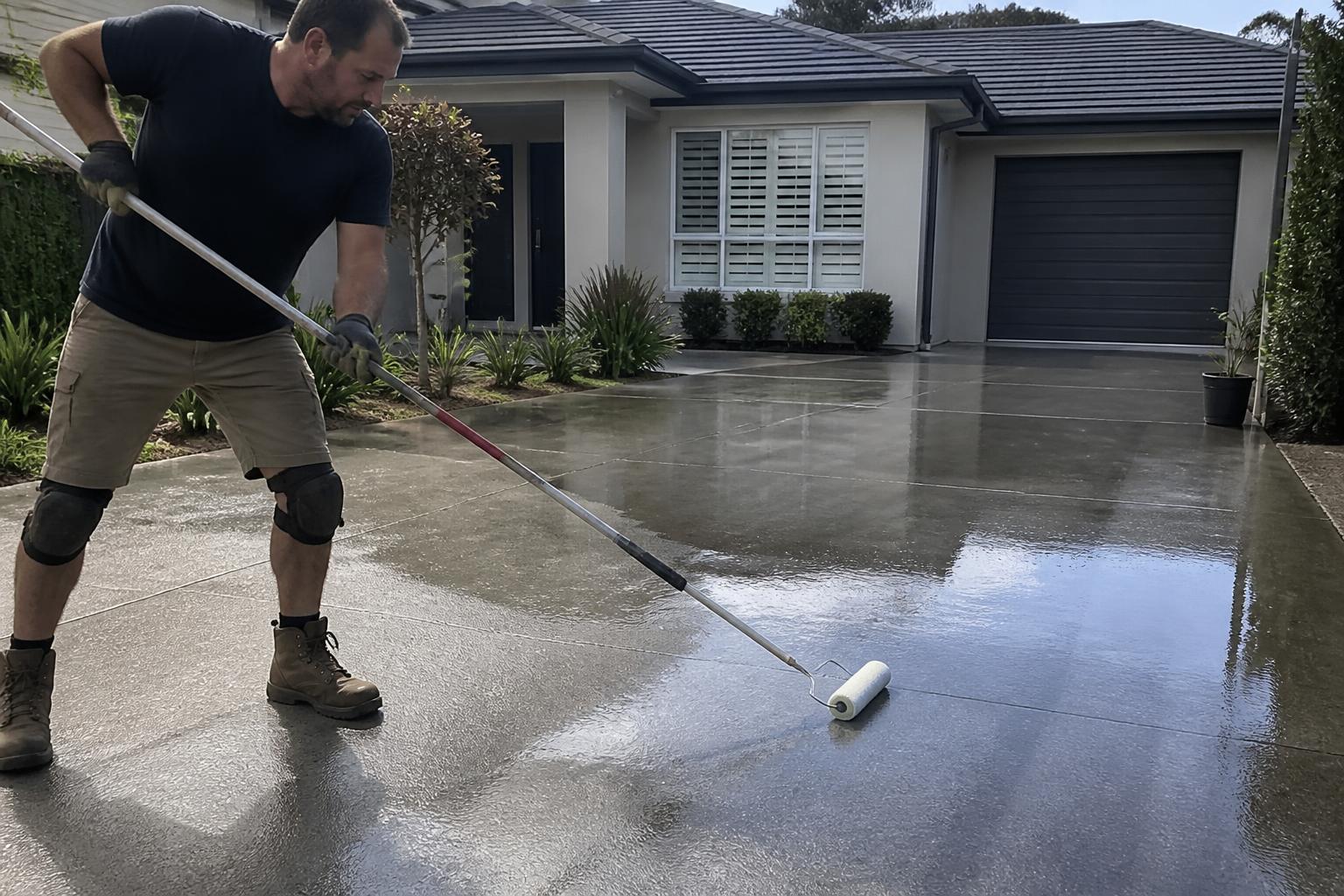
A penetrating sealer on freshly cleaned concrete or pavers means oil sits on top instead of soaking in, water absorption drops, and mould has less moisture to feed on. It typically holds up for three to five years and makes every future clean faster and cheaper.
Need this done?
Free quote, fixed price, no obligation
We cover 183 Sydney suburbs. Send photos and we'll usually quote without a site visit.