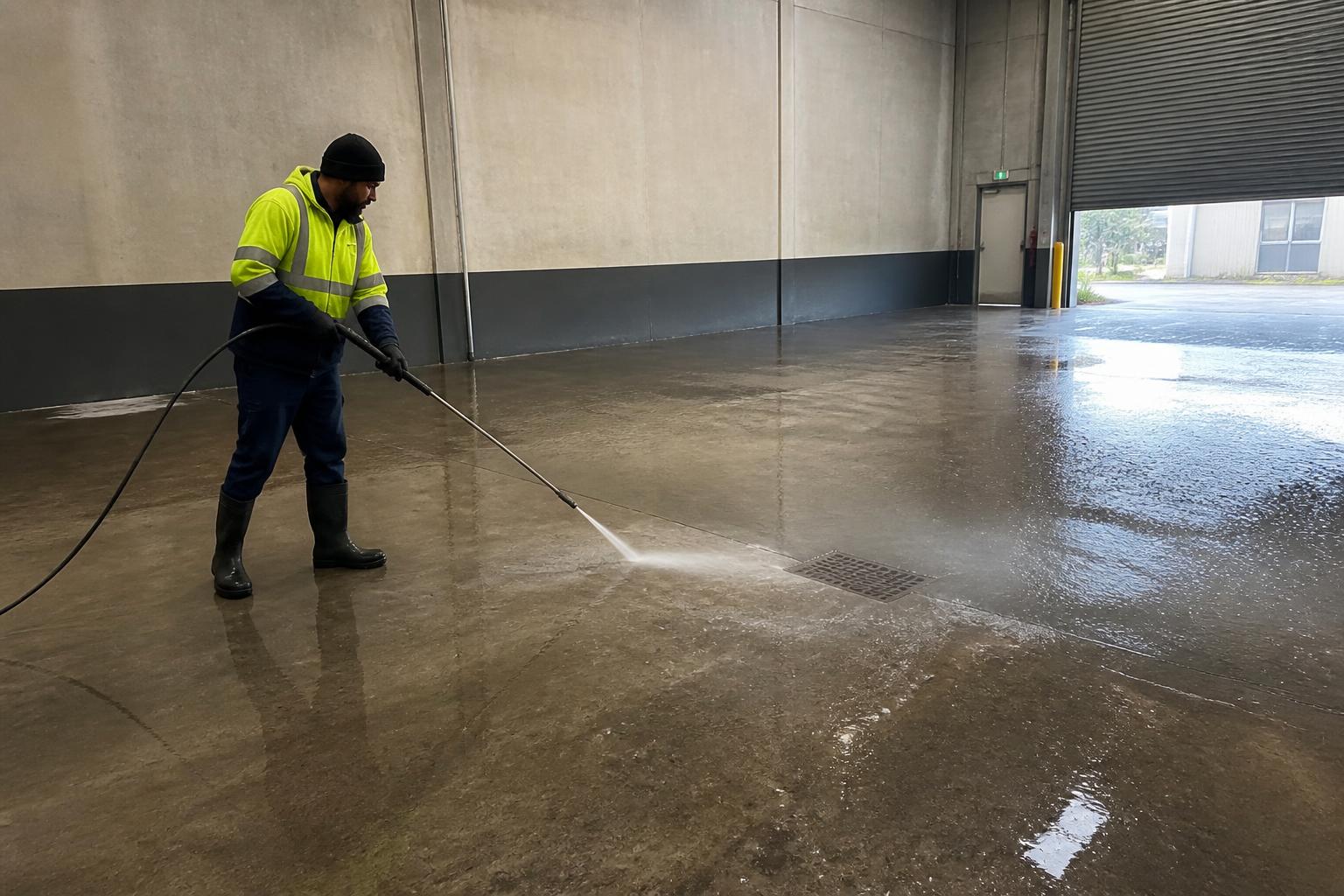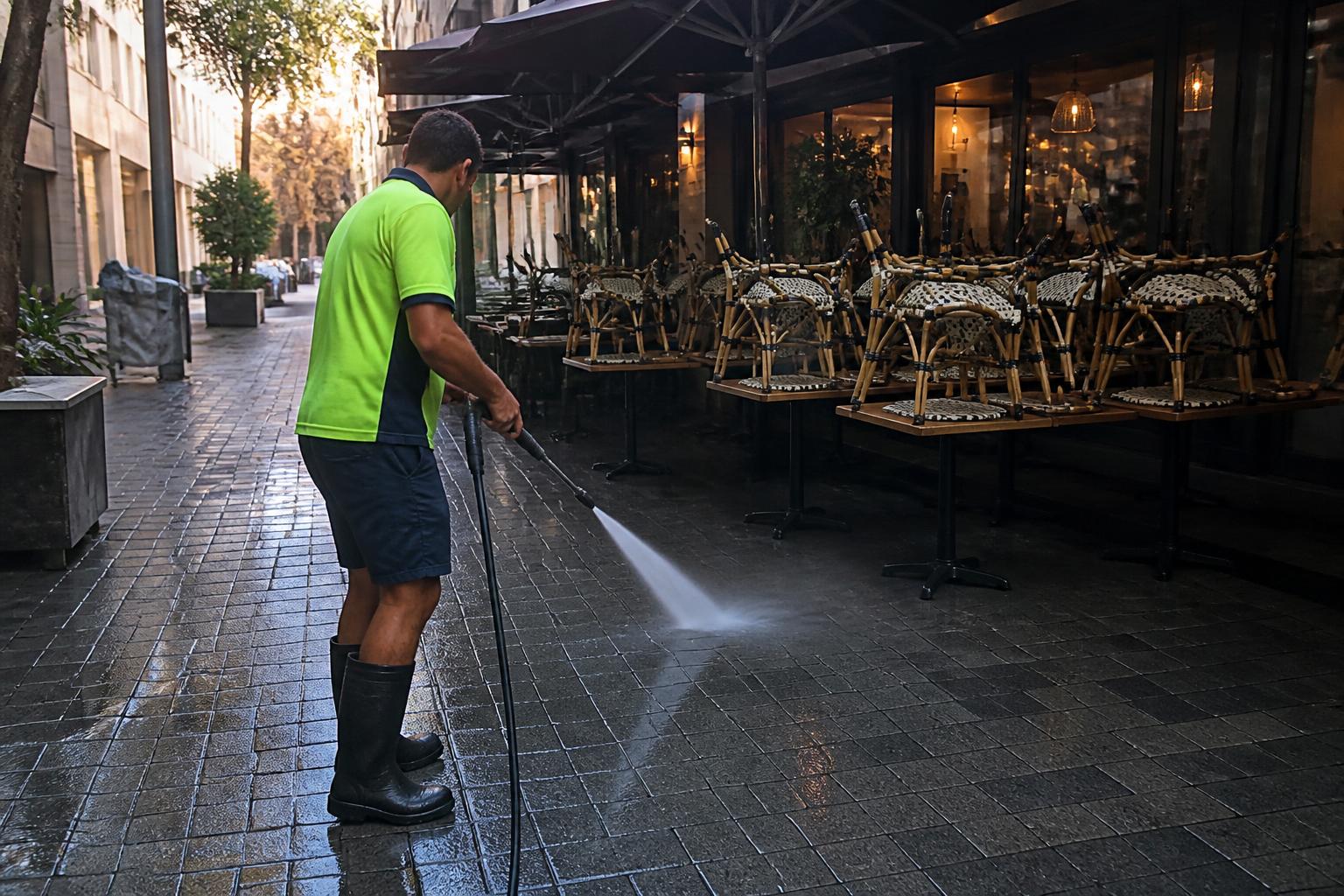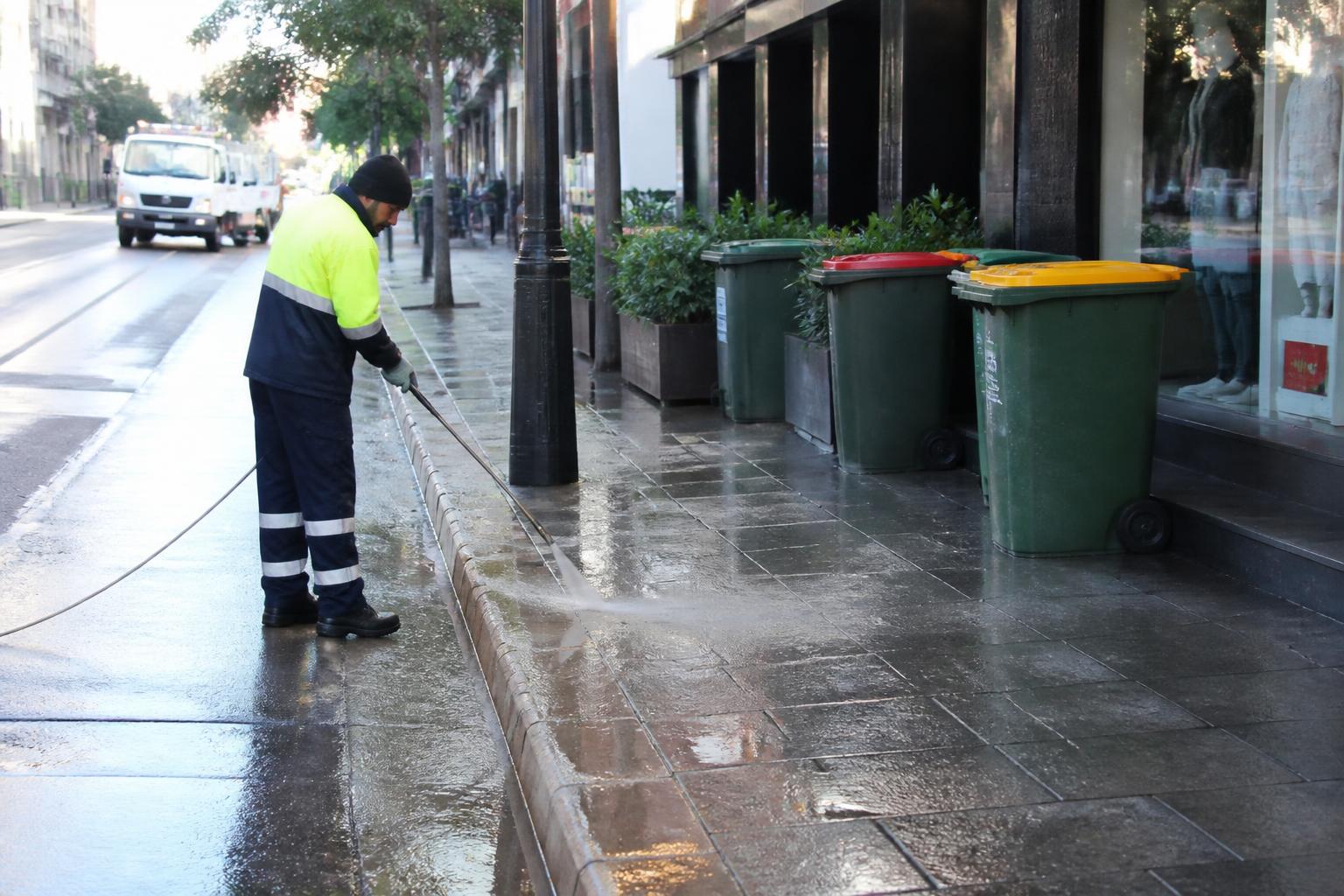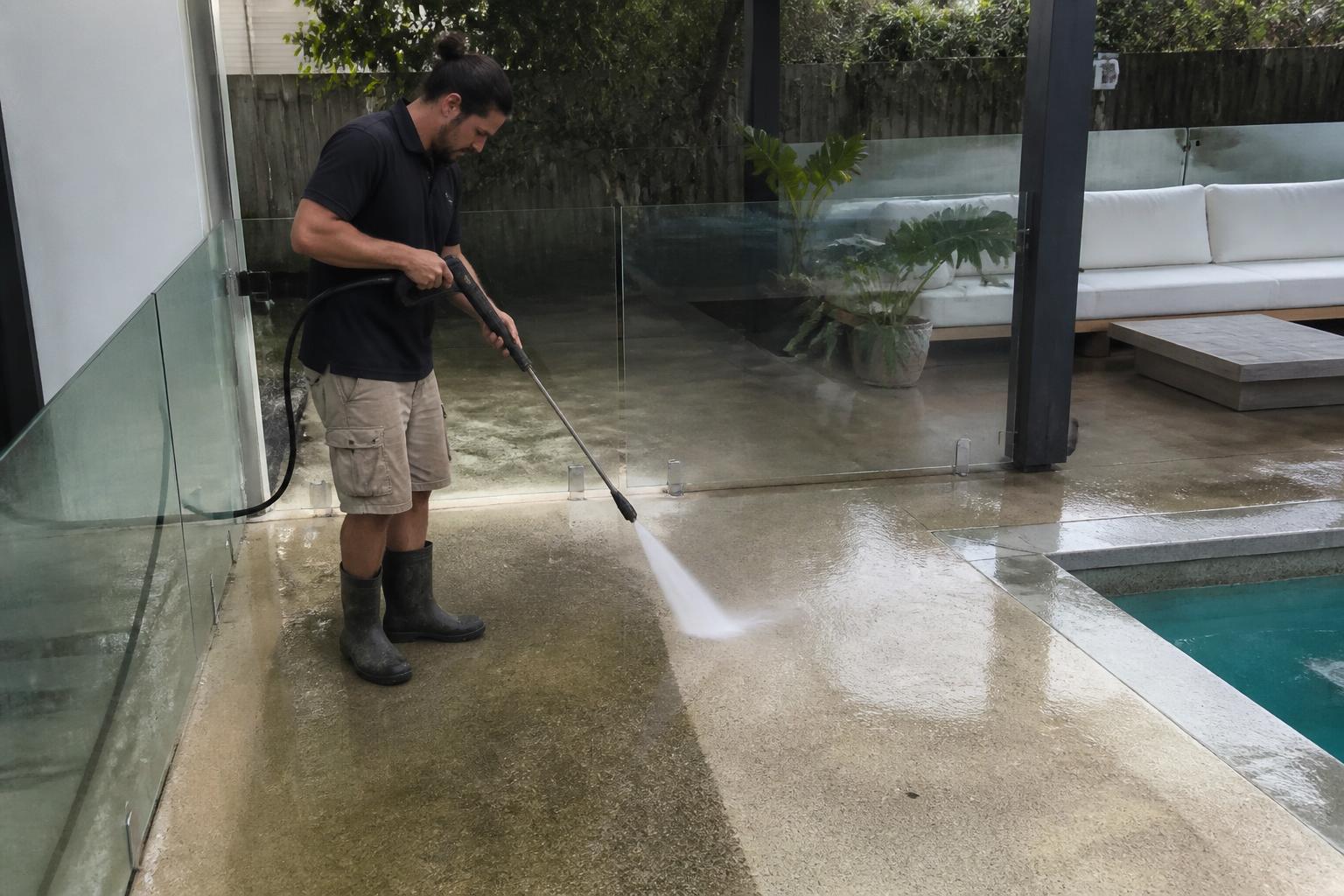
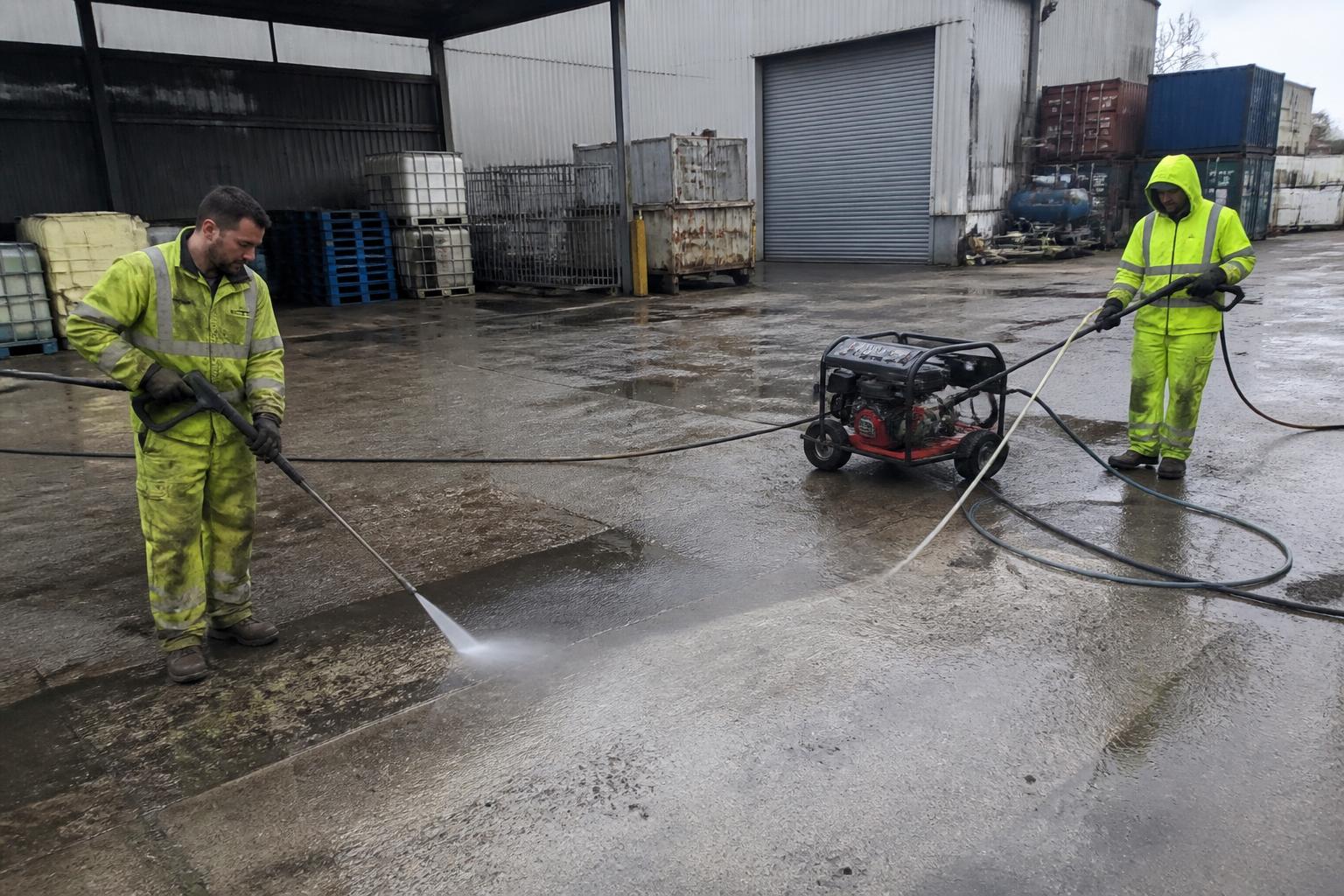
Ask most people what happens to the water after a car park is cleaned and they'll assume it goes down the drain. In NSW, that's frequently illegal — and it's the property owner who carries the exposure, not just the contractor.
This is a plain-English explanation of the obligation and how compliant cleaning works in practice.
The basic obligation
Stormwater drains discharge to creeks, rivers and the harbour without treatment. Under the Protection of the Environment Operations Act, allowing contaminated water to enter that system is a pollution offence, and councils actively enforce it in commercial and strata settings.
Contaminated means more than mud. Car park run-off carries hydrocarbons, heavy metals and rubber. Cleaning chemicals count. Roof debris and lichen slurry count. Grease and food waste from a hospitality site definitely count.
Who this affects most
- Strata schemes cleaning common car parks, ramps and bin areas
- Retail and hospitality sites washing footpaths, docks and grease trap surrounds
- Industrial operators cleaning hardstand, wash bays and plant
- Councils cleaning public paving and amenities
- Service stations, workshops and transport depots
How capture systems work
Our Clean & Capture system vacuums waste water to a holding tank at the same moment the surface is cleaned. The recovered water is then treated and disposed of legally off site. Nothing reaches a floor waste or a stormwater pit.
The practical bonus is that it makes indoor work possible — warehouse floors, retail interiors and commercial kitchens can be cleaned without flooding an operating building.
What to ask a contractor
Ask how waste water will be contained, treated and disposed of, and ask for documentation. If the answer is a shrug or a bunded drain cover with no recovery, you're taking on the risk of whatever ends up in the drain.
Need this done?
Free quote, fixed price, no obligation
We cover 183 Sydney suburbs. Send photos and we'll usually quote without a site visit.