People use 'pressure washing' and 'house washing' interchangeably. They're different processes with different tools, and choosing wrongly is how render gets water behind it and paint gets stripped off weatherboard.
Here's the practical distinction, and how to work out which one your home needs.
The core difference
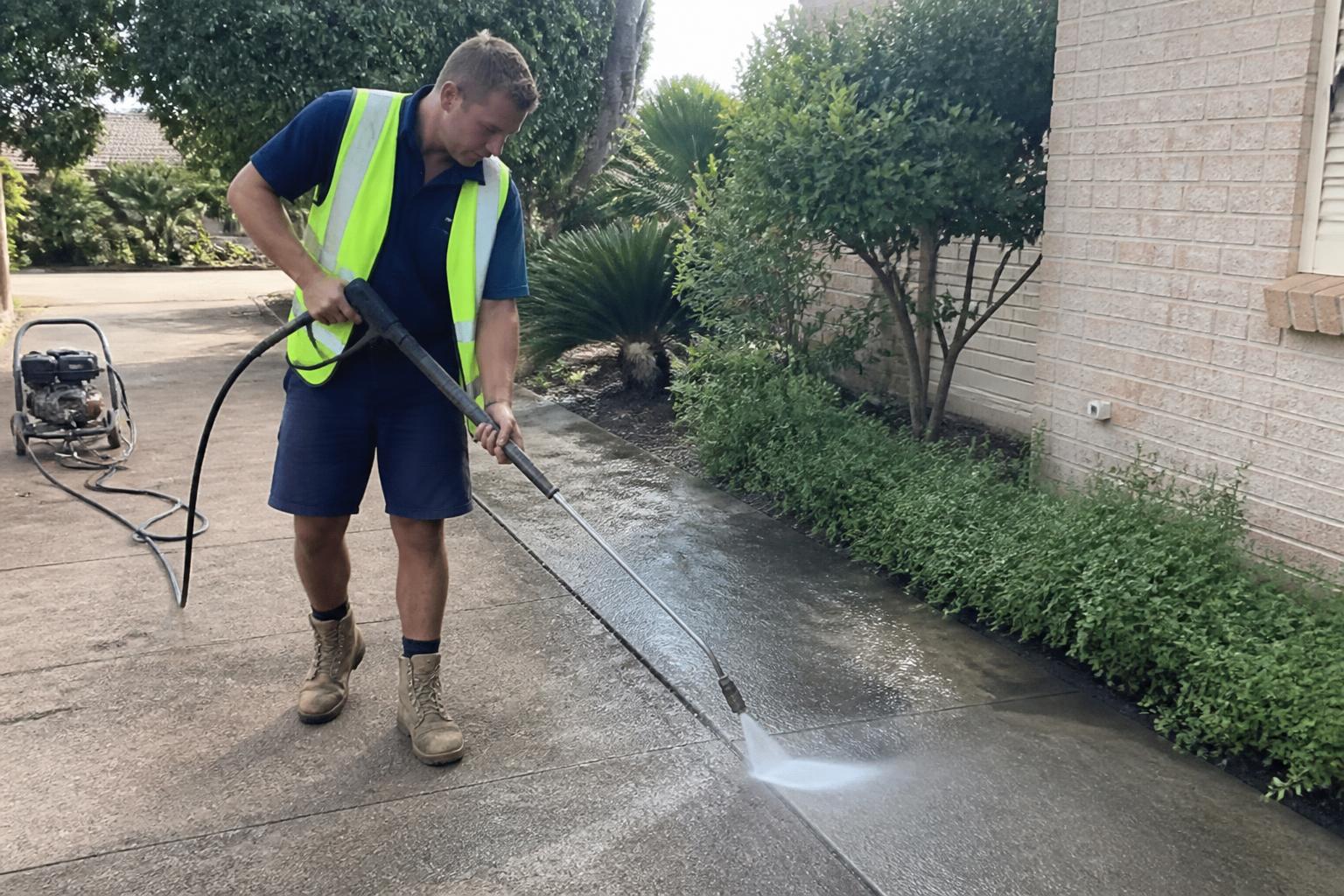
High pressure cleaning removes contamination with water force — effective on sound concrete, pavers and brick.
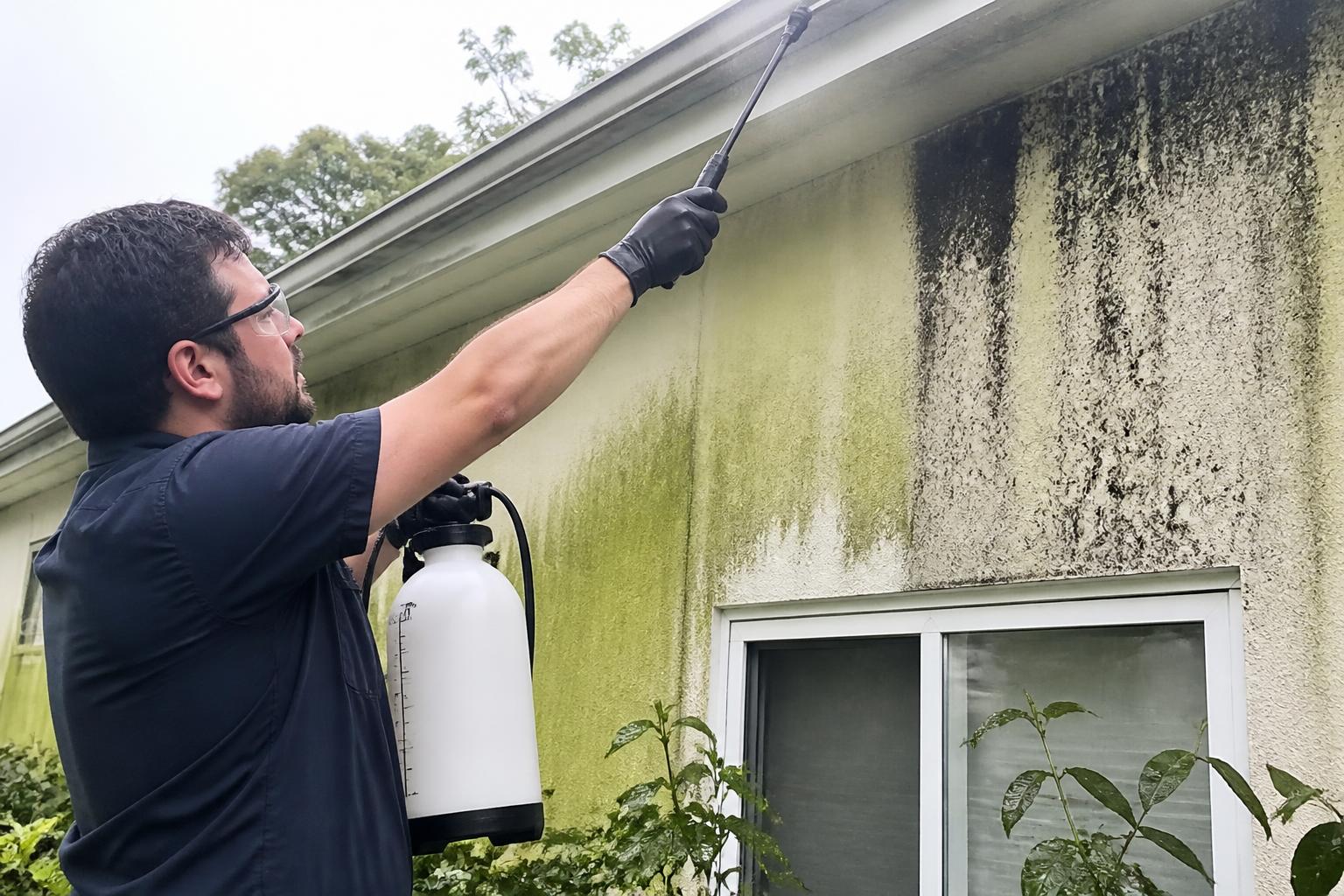
Soft washing applies a biodegradable cleaning solution at roughly garden-hose pressure, lets it kill the organic growth over several minutes, then rinses. The chemistry does the work. It's slower, gentler and lasts longer on organic staining.
Surfaces that should always be soft washed
If it's painted, coated or fragile, pressure is the wrong tool.
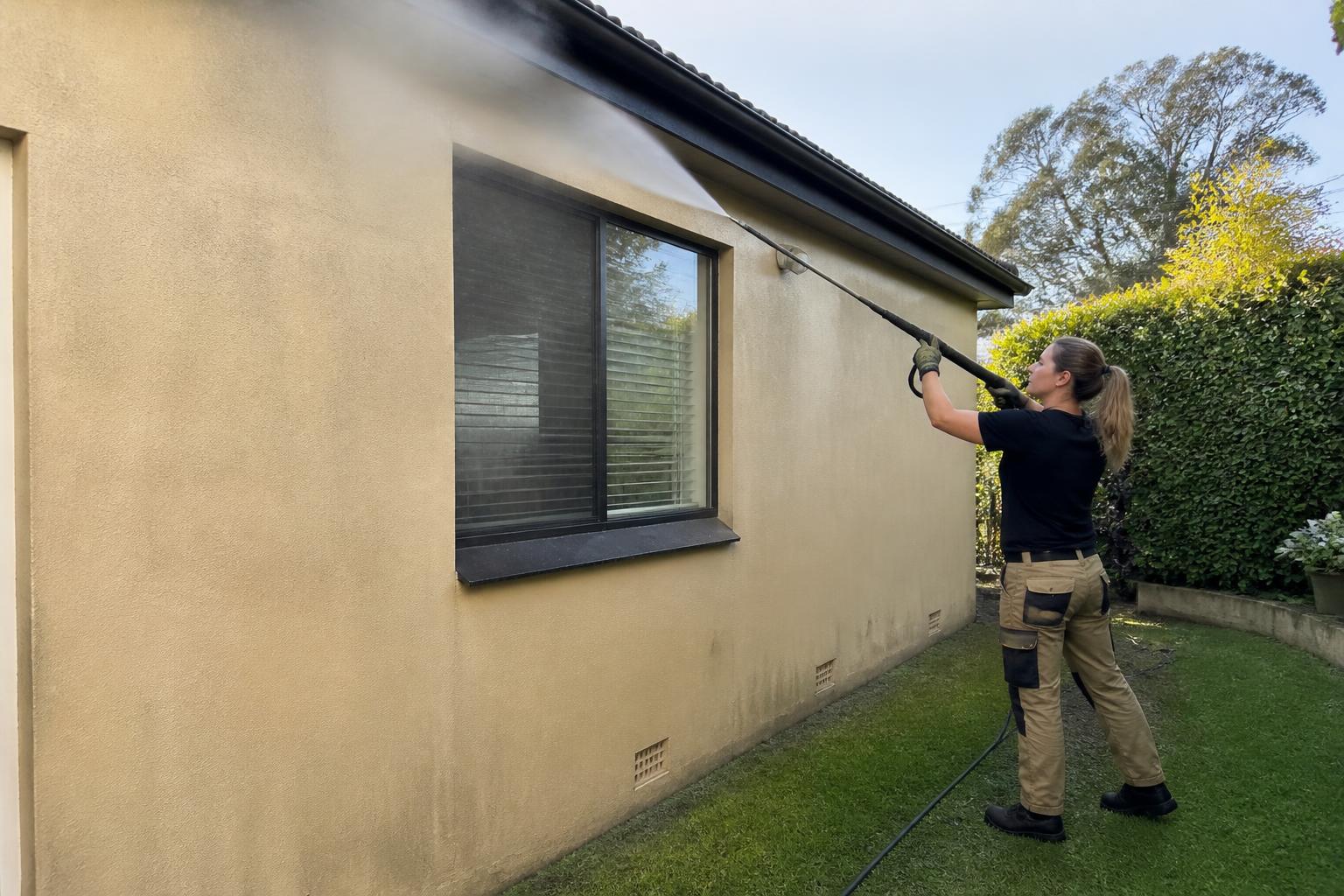
- Acrylic and cement render
- Painted weatherboard and timber cladding
- Fibre cement and composite cladding
- Eaves, soffits, fascia and gutter faces
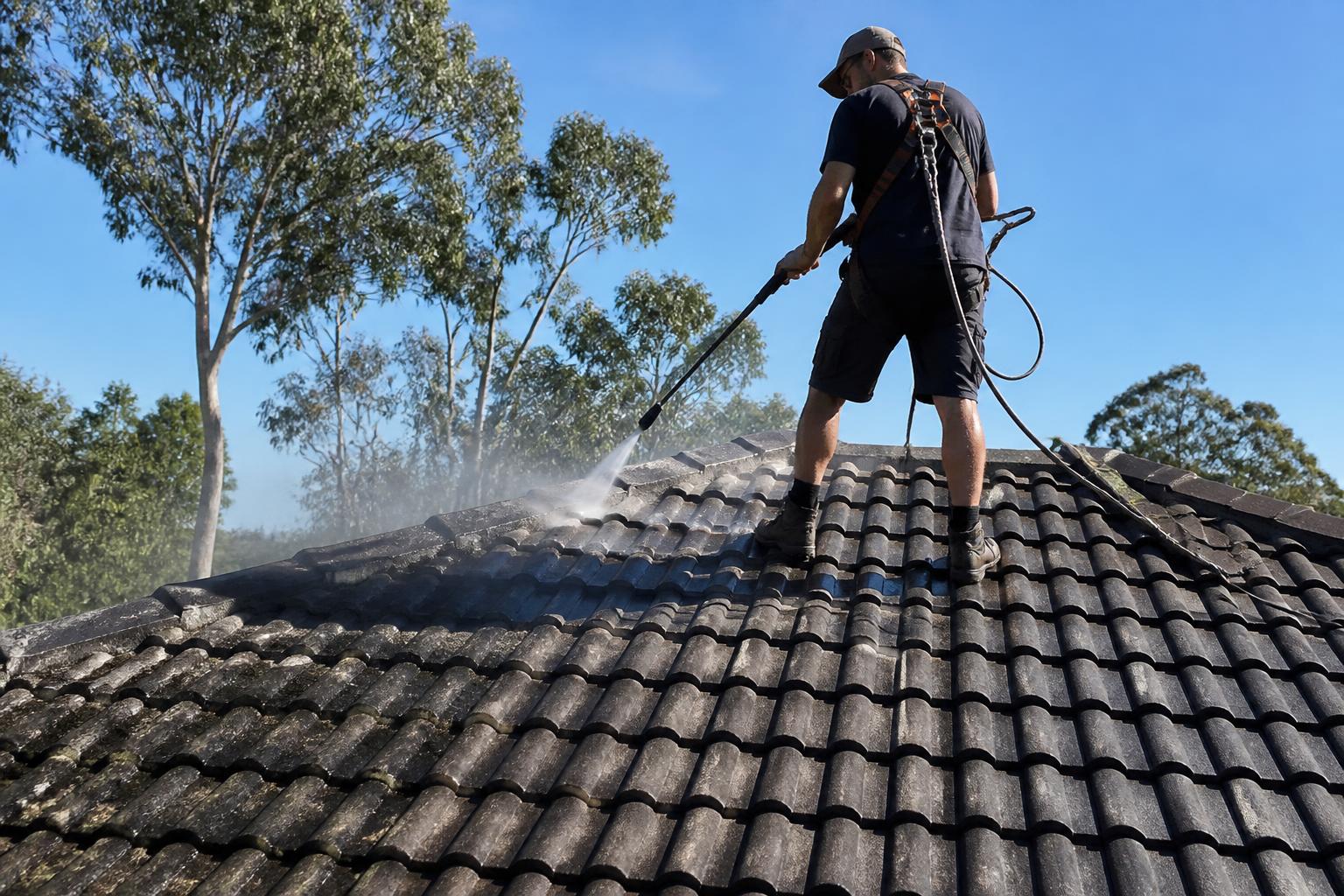
- Roof tiles, especially old cement and terracotta
- Window frames, screens and seals
Surfaces where high pressure earns its keep
Hard, sound, unpainted surfaces respond well and clean up faster.
- Concrete driveways, paths and slabs
- Clay and concrete pavers
- Sound face brickwork
- Car parks, docks and industrial floors
- Retaining walls and garden edging
Why soft washing lasts longer
Pressure removes visible growth but leaves the organism's root structure and spores behind, so mould returns quickly. A soft wash treatment kills it, which typically doubles the time before the surface looks dirty again. On a Sydney home that's the difference between washing every spring and washing every second year.
Most homes need both
A typical exterior clean means soft washing the walls, eaves and roof, and pressure cleaning the driveway, paths and patio. That's one visit with two methods — which is exactly how it should be quoted.
Need this done?
Free quote, fixed price, no obligation
We cover 183 Sydney suburbs. Send photos and we'll usually quote without a site visit.