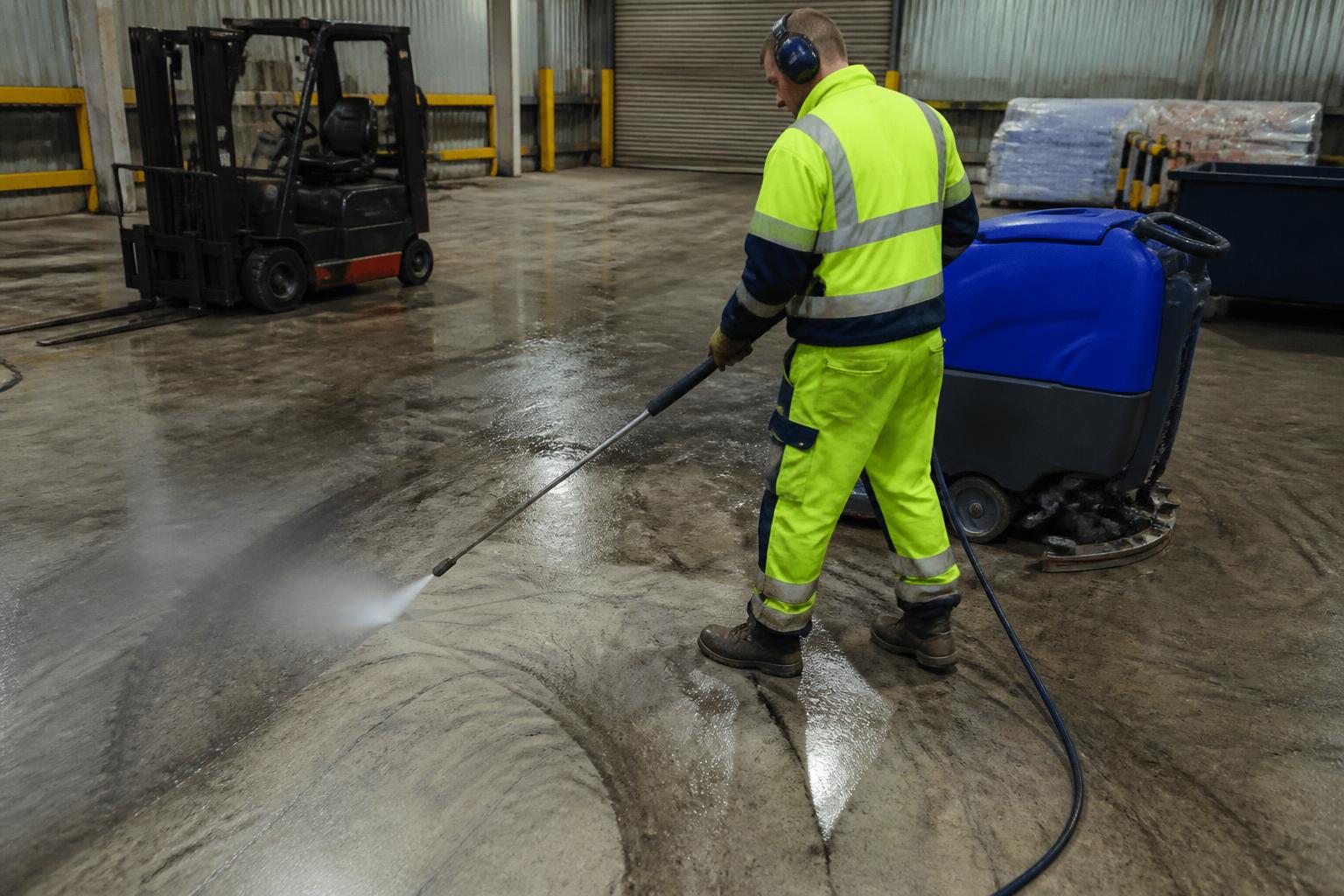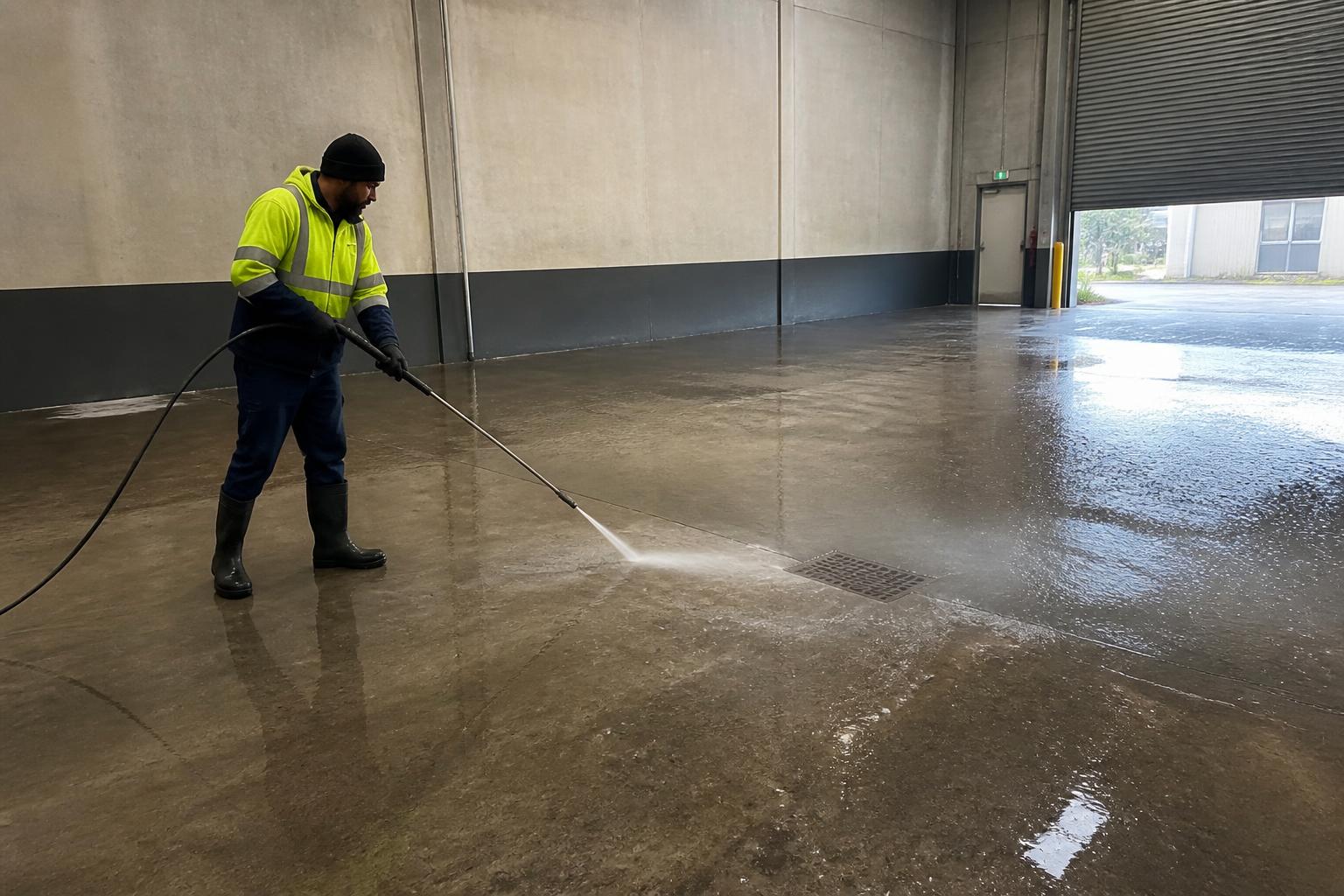
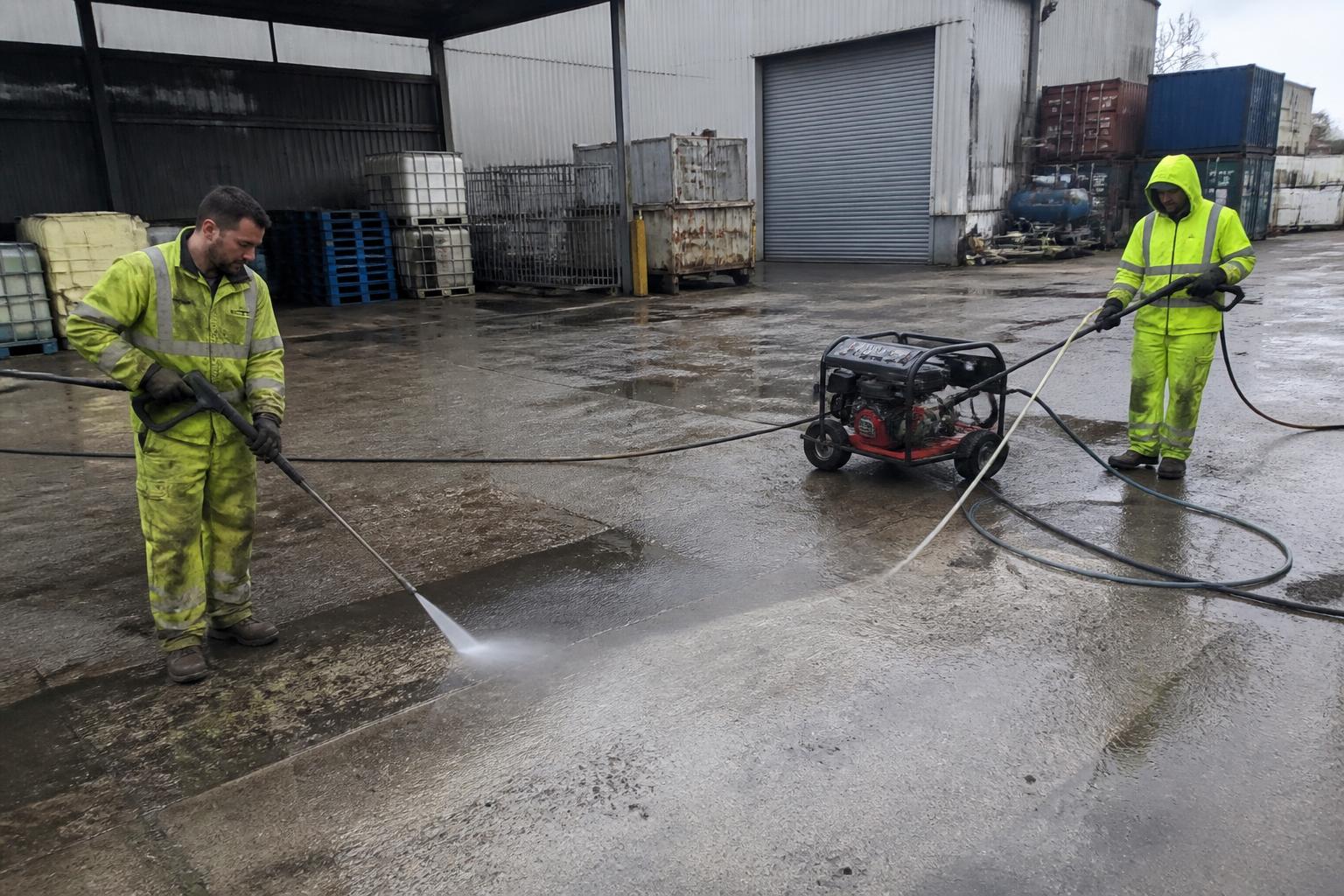
Nobody wants to close a distribution centre to clean the floor. The good news is you rarely have to — the constraint is water management, and that's solvable.
Here's how internal industrial floor cleaning works in practice.
What's actually on the floor
Industrial floor contamination is layered, and each layer needs different chemistry or heat.
- Forklift and pallet-jack rubber, baked into the surface
- Hydraulic oil, grease and lubricant spills
- Carbon and exhaust deposits near roller doors and docks
- Product residue — food, powders, resins, adhesives, dyes
- Rust staining under racking and steel plant
Why capture makes indoor work possible
Cleaning and vacuum recovery happen simultaneously, so water goes straight to a holding tank instead of across the floor. Aisles come back into service almost immediately, nothing enters floor wastes, and the recovered waste is treated and disposed of off site.
Staging around operations
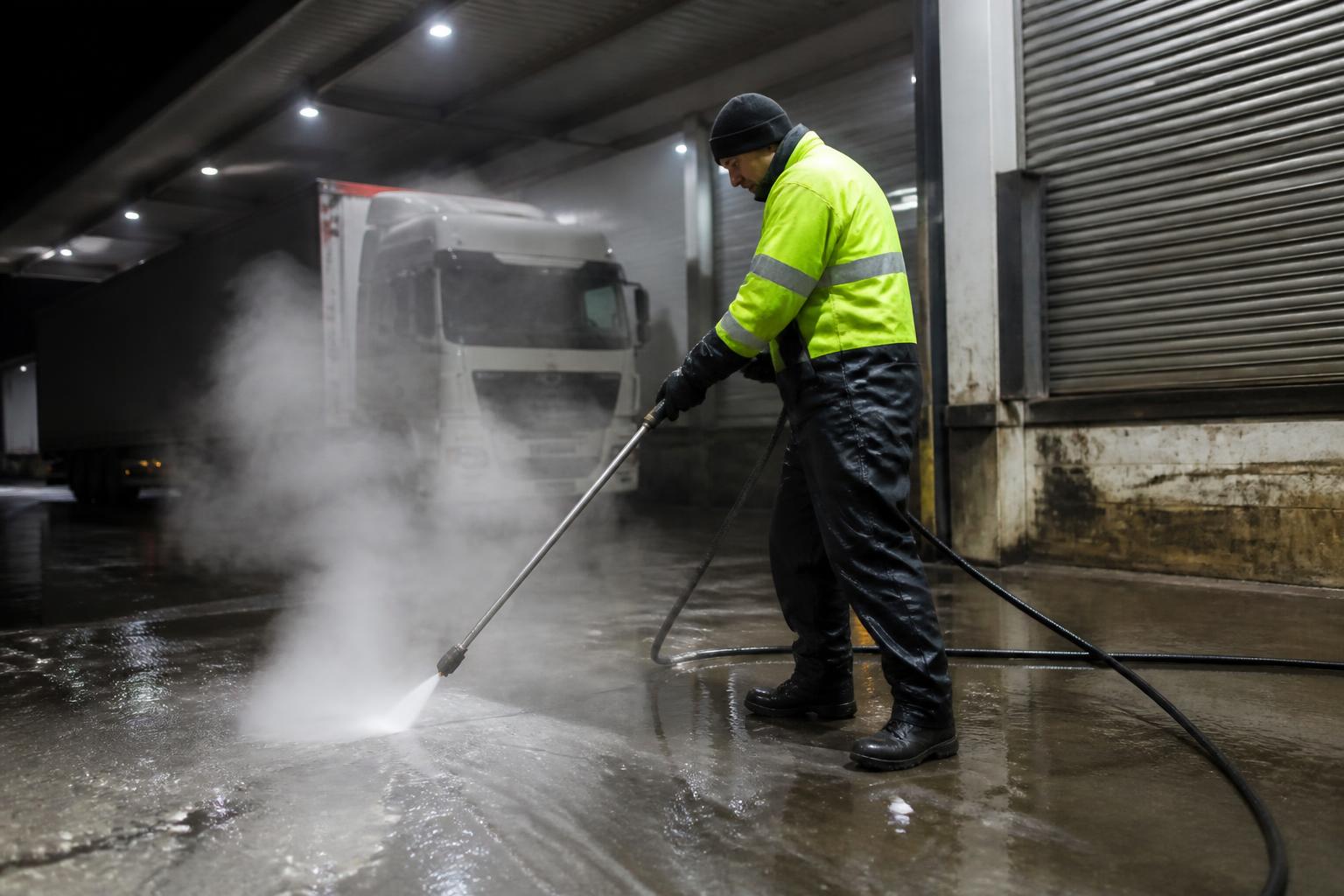
Work is broken into zones or aisles and scheduled around shifts, stocktakes or shutdown windows. Night work is common. Racking, plant and stock are protected before anything gets wet, and site inductions and SWMS go in first.
Food-grade environments
Steam sanitation combined with full waste recovery suits food processing, commercial kitchens and cold storage, and produces documentation that satisfies HACCP and audit records. Heat does the sanitising, which keeps chemical residue to a minimum.
The safety dividend
A clean floor reflects more light, makes line marking legible again and cuts slip risk. It also exposes the slab's real condition — joint failures, cracking and worn coatings — while there's still time to plan repairs rather than react to them.
Need this done?
Free quote, fixed price, no obligation
We cover 183 Sydney suburbs. Send photos and we'll usually quote without a site visit.