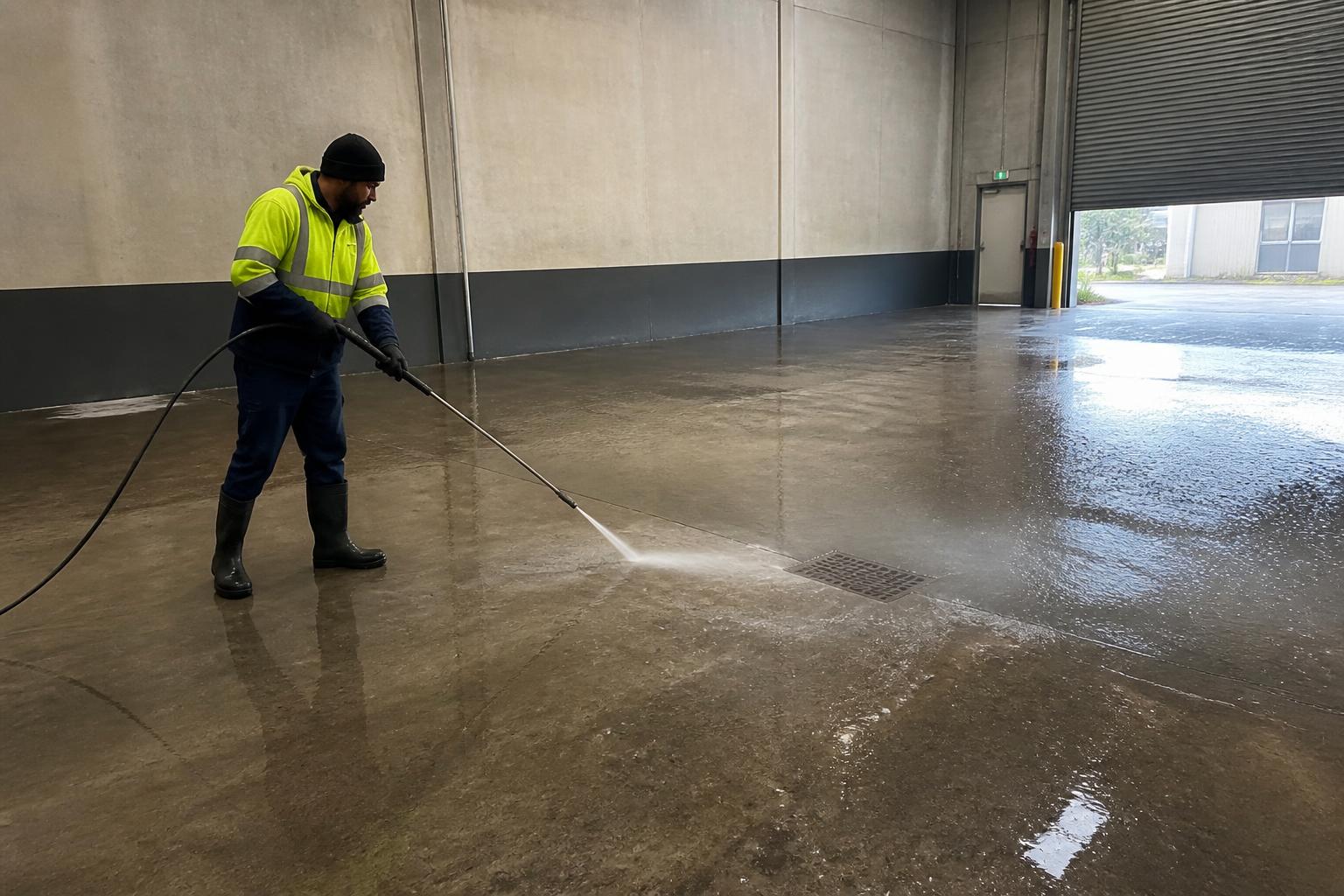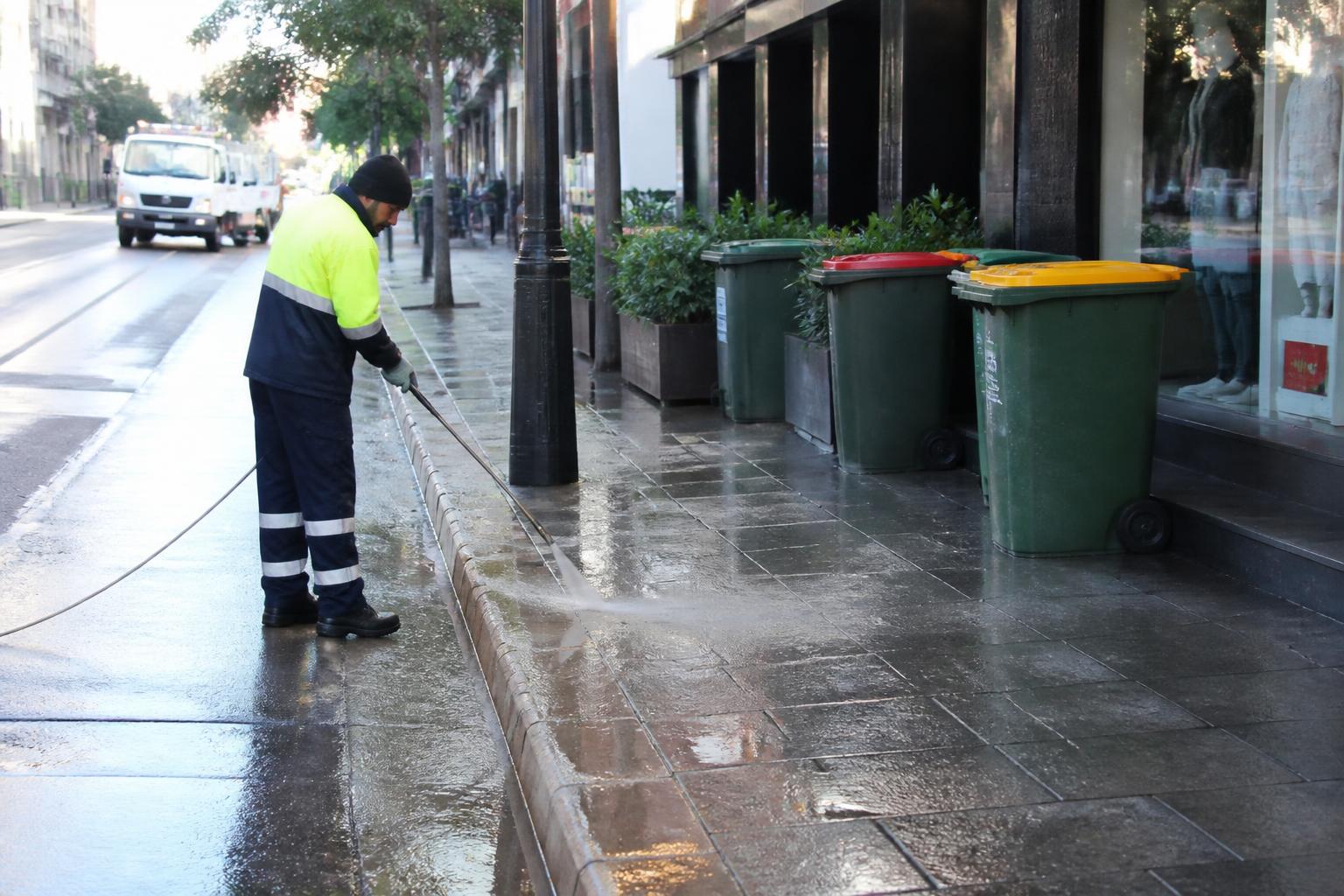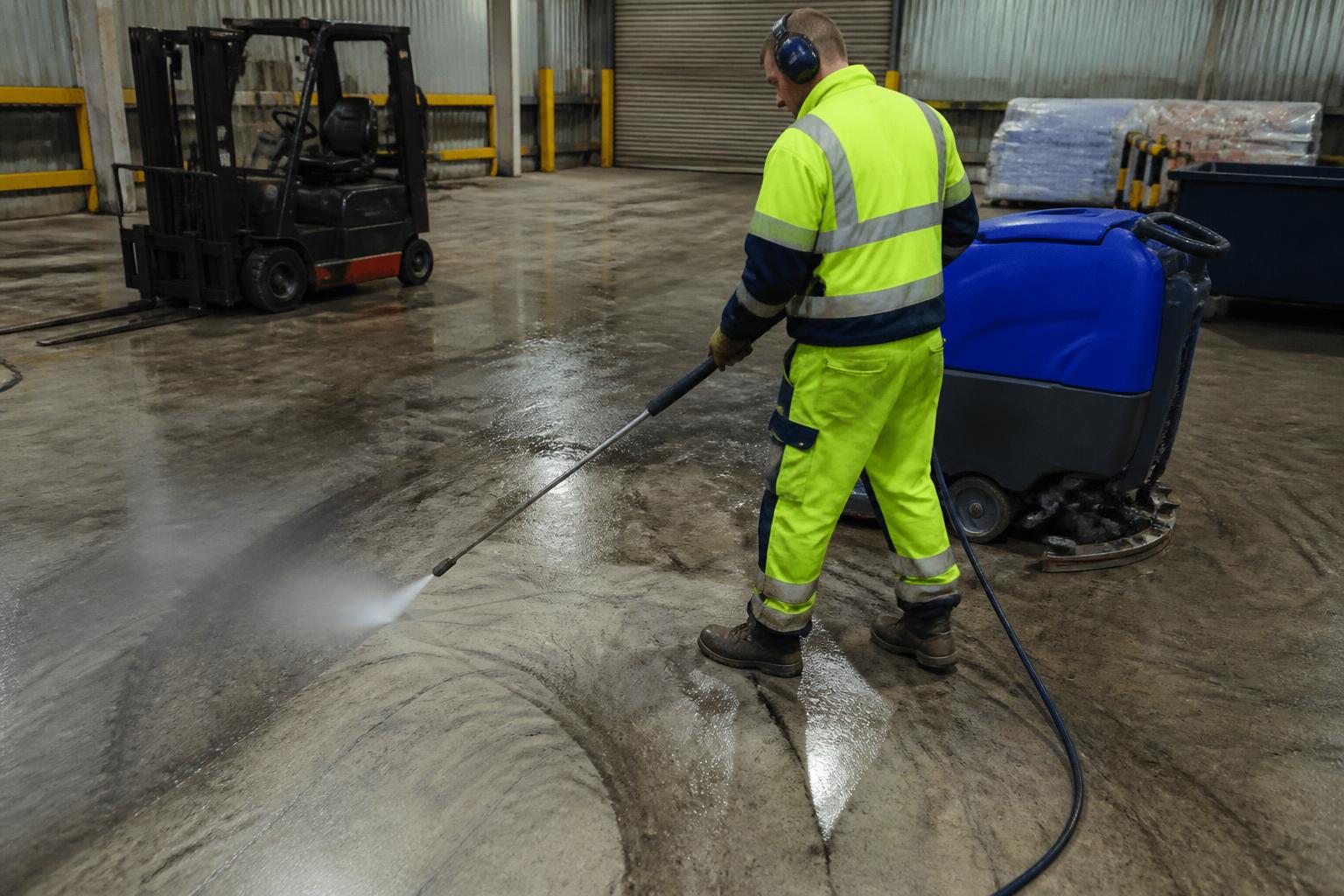
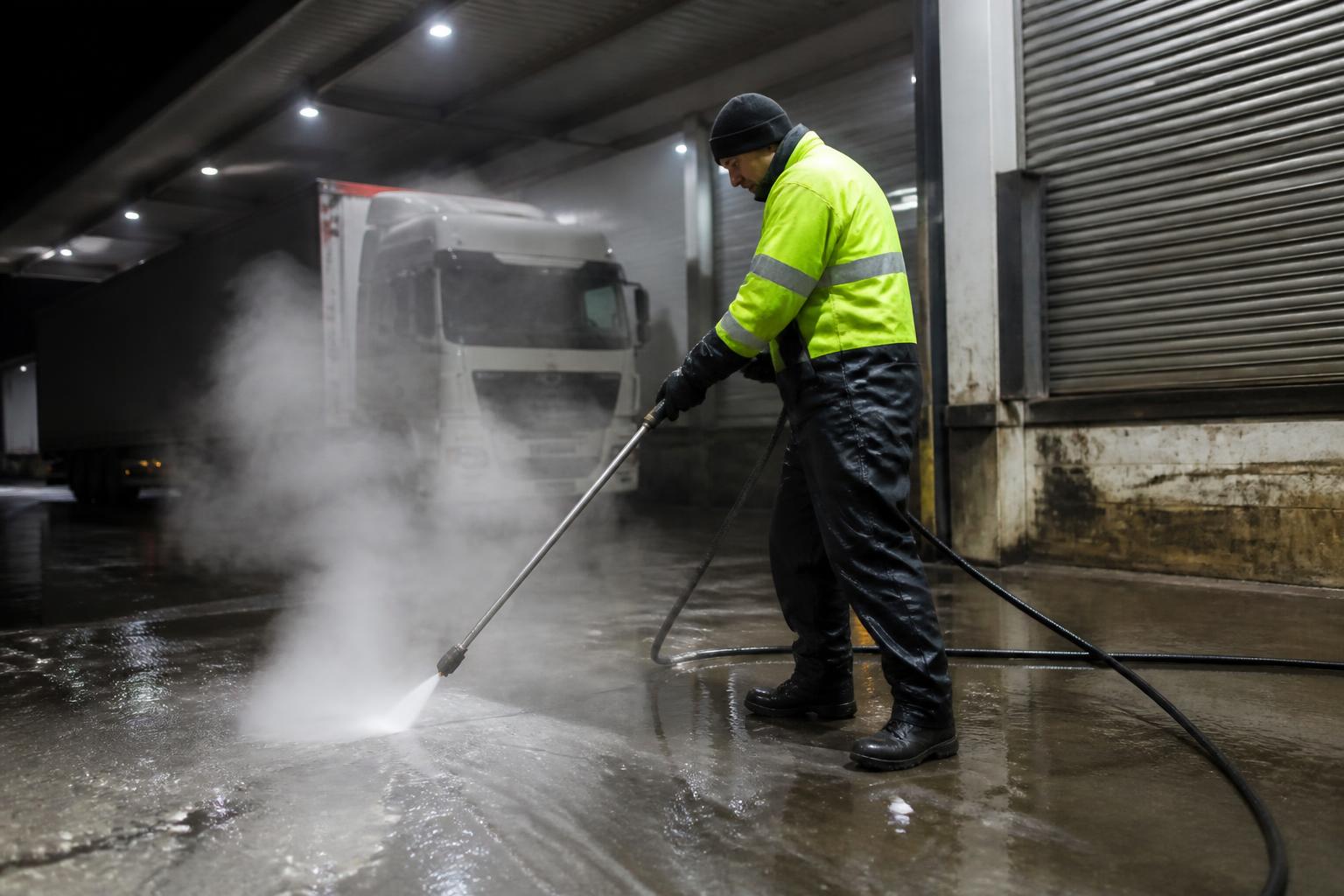
There's a category of cleaning problem where more pressure simply doesn't help: anything greasy, sticky, sanitary or fragile. That's where steam earns its place on the truck.
How steam does the work
Heat breaks the bond between contamination and the surface, so the contamination lifts at much lower pressure. Lower pressure means less risk to soft mortar, old brick, sandstone and coated floors — while the result is better, not worse.
Where it's the right tool
- Chewing gum on retail footpaths, plazas and entries
- Kitchen exhaust areas, grease traps and bin rooms
- Food processing floors where sanitation is audited
- Sandstone, heritage brick and soft masonry
- Graffiti shadowing and adhesive residue
- Oil and hydraulic contamination in workshops and docks
Far less water
Steam uses a fraction of the water cold high-pressure cleaning does — which matters under water restrictions, indoors, and anywhere run-off is difficult to control. Paired with waste water recovery, it makes cleaning occupied buildings practical.
Sanitation without heavy chemicals
Heat kills bacteria and mould spores on contact, so childcare centres, aged care, medical facilities, gyms and food premises get a genuinely sanitised surface with minimal chemical residue.
Need this done?
Free quote, fixed price, no obligation
We cover 183 Sydney suburbs. Send photos and we'll usually quote without a site visit.